
Drowning in Reverse
He was 18.

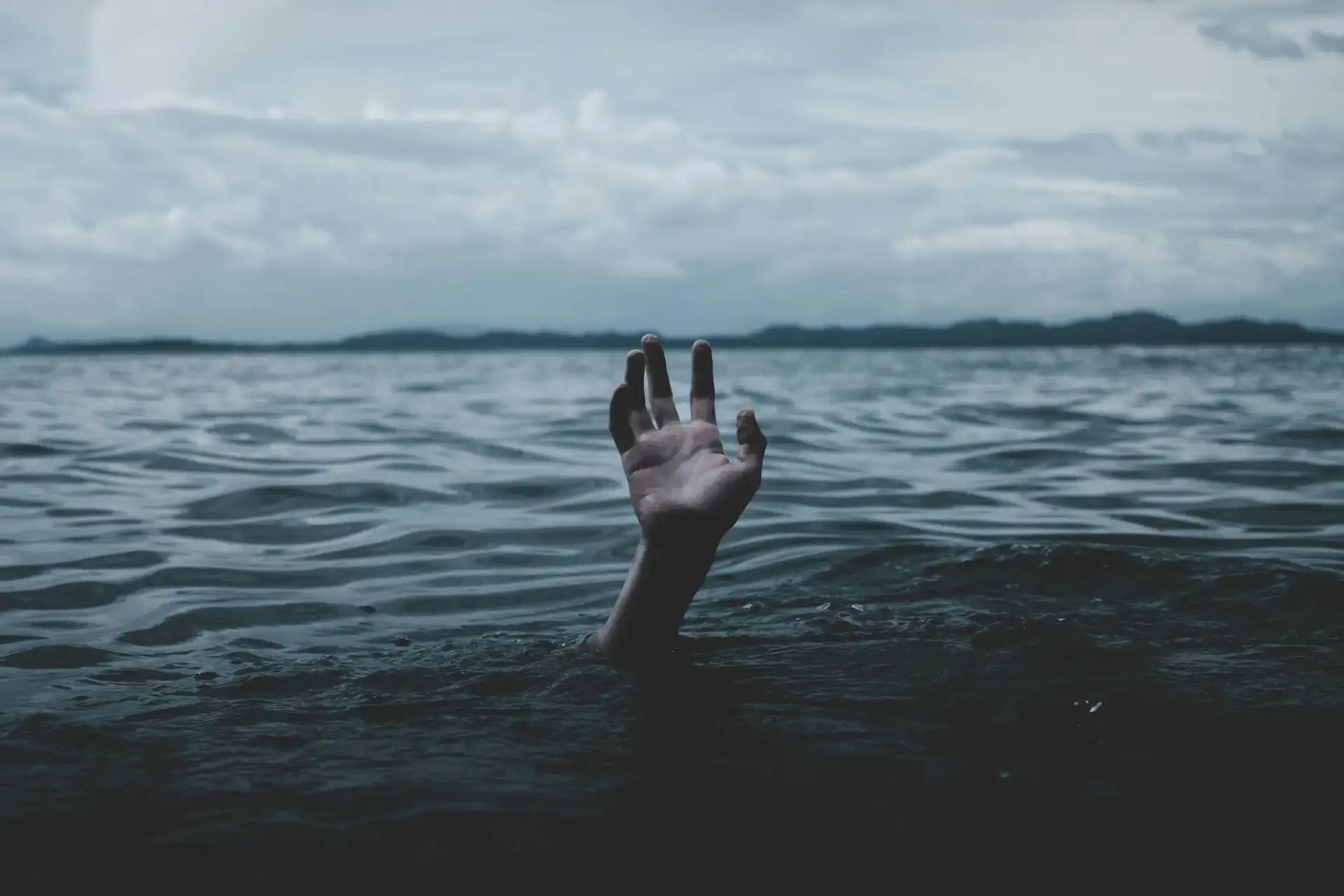
It was early in the morning and sunny, and I stood on a fishing boat. A storm hovered on the horizon, but at that moment, the water around me was calm.
I turned at the sound of a splash to see a giant black tentacle burst out of the water. It whipped toward me and snaked its way around my ankle. Jerked off my feet, I slammed onto the deck and started sliding toward the open back of the boat.
The life I was living was over. I would never get it back.
As I slid toward the back of the boat, I watched the tentacle disappear over the edge, dragging me with it. I kicked at the tentacle with my free leg and grasped at anything I could see. But I grabbed nothing.
“No, no, no, no, no,” I said as I slid toward the water.
I splashed into the ocean, and the tentacle tightened its grip as we rocketed toward the bottom. The water got darker and darker, and the surface further away. Once on the bottom, I floated next to a gigantic, dark shape, its tentacle still holding me prisoner.
That calm moment on the surface was a distant memory. I wouldn’t see light again for years.
The dark monster that dragged me into the abyss—ripping me out of one life and into another—was the suicide of my oldest son.
He was 18.
When I got the call, my mind scrambled to grasp onto some other reality. It was such a horrible thought—that inky black tentacle dragging me down—that I immediately started grasping at other ways that would explain it. Anything but the truth. Maybe it was a mistaken identity. Maybe he was playing a cruel joke on us. Maybe anything but what it was.
Like a crazy person, I babbled, “No, no, no, no, no,” as I ran back home.
When I got there, I was in the water and sinking. And I didn’t stop until I hit the bottom; a dark world, immersed in death and grief and horror.
It was everywhere all at once.
Around the same time, our patio was being rebuilt. One morning, I looked outside and noticed that the seams between the bricks didn’t line up with the patio’s outer edges. The contractor had started laying bricks without first ensuring that the seams would be square with the space. And they were so indifferent to their sloppy work that they had started cutting bricks on an angle to fit into the last row.
“Hey...” I said on the phone. “I just noticed that the patio bricks aren’t square with the edges. They’ll have to be relaid.”
“Oh, it’s not a big deal,” he said. “After a while, you won’t notice it.”
Fuck that. I’m one of those weirdos who doesn’t see the subject of a painting, but I’ll notice if it’s crooked. So having crooked bricks in a patio—especially right outside the kitchen window—was not an option. I would never not notice it, and “after a while” it would only drive me crazy.
I didn’t have the patience and energy to explain good work to a lazy person, so I hung up the phone, walked outside, and tore up all the bricks. Then I re-laid them, hiding the contractor’s sloppy work where I couldn’t square it. I left him drawings of each oddball brick that remained to be cut, along with a diagram showing where it should be placed.
For those few hours that I played brick-Tetris, it was distracting just enough. I could push away reality just enough to breathe again. But as I laid the last brick, reality came rushing back.
I slipped back under the water and started sinking again.
That’s how it went for the first few years.
Most of the time, I was drowning, far from light and air. Then something would catch my attention, and it would be distracting just enough that I would resurface. For a few seconds, I wouldn’t think of my dead son. But then just as quickly, the moment would pass, and I’d start sinking again. I always got dragged back down.
At first, resurfacing was rare and brief. As time went on, I started to surface more frequently and for longer.
I was drowning in reverse.